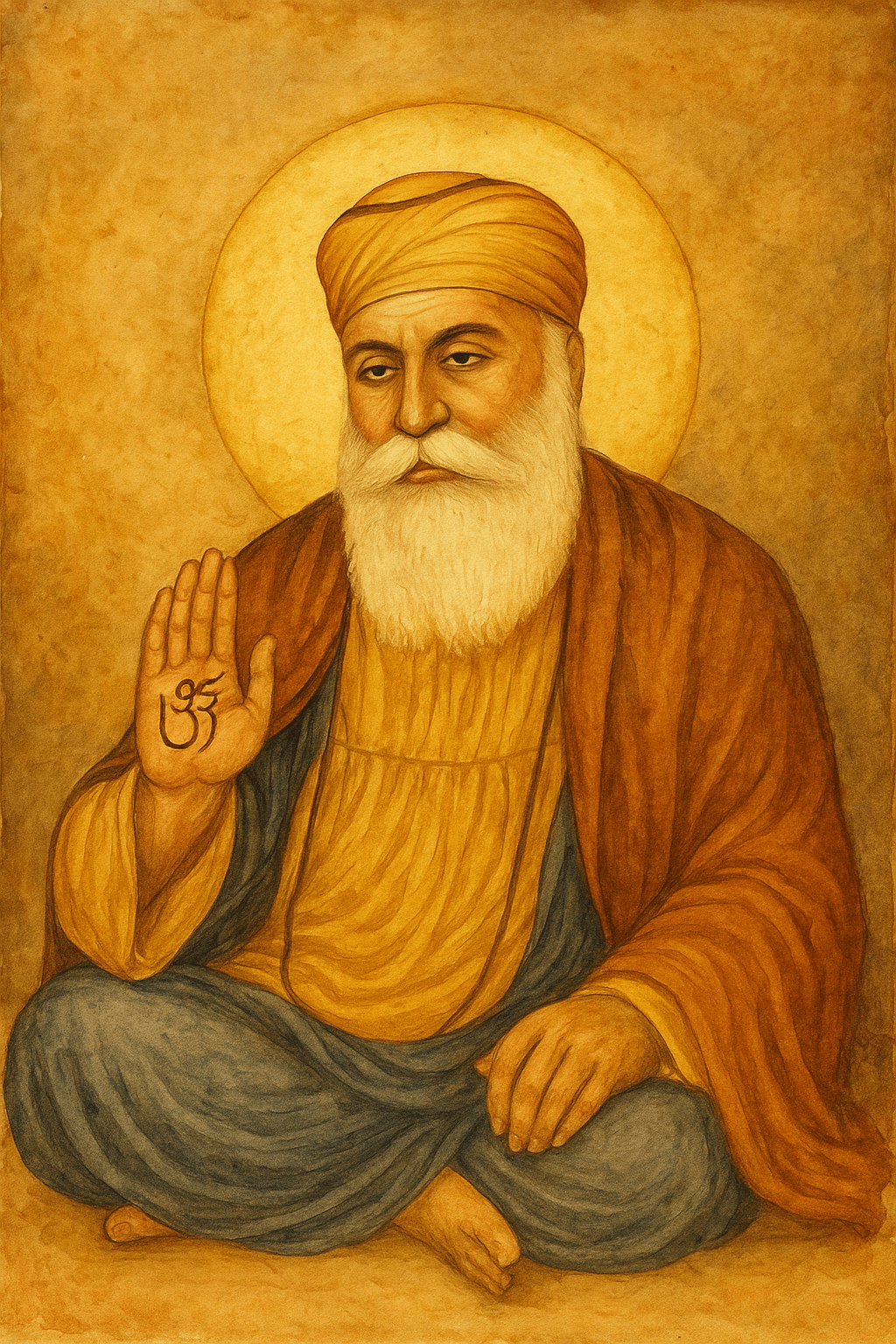
Kundalni Yoga
A brief history
Before we explore the how—to breathe, to move, to awaken—it’s important to understand the why.
Kundalini Yoga, as it’s practiced today, did not emerge in a vacuum.
It is the result of centuries of spiritual synthesis, cultural shifts, devotion, and, yes, controversy.
This blog post offers a transparent look at the roots, the evolution, the wisdom, and the wounds that shape this powerful tradition.
If you feel called to dive into the full history—
from ancient yogic texts and Sikh Gurus to the rise of 3HO and the ethical reformation of today—
read on below.
Ancient Origins of Kundalini Yoga
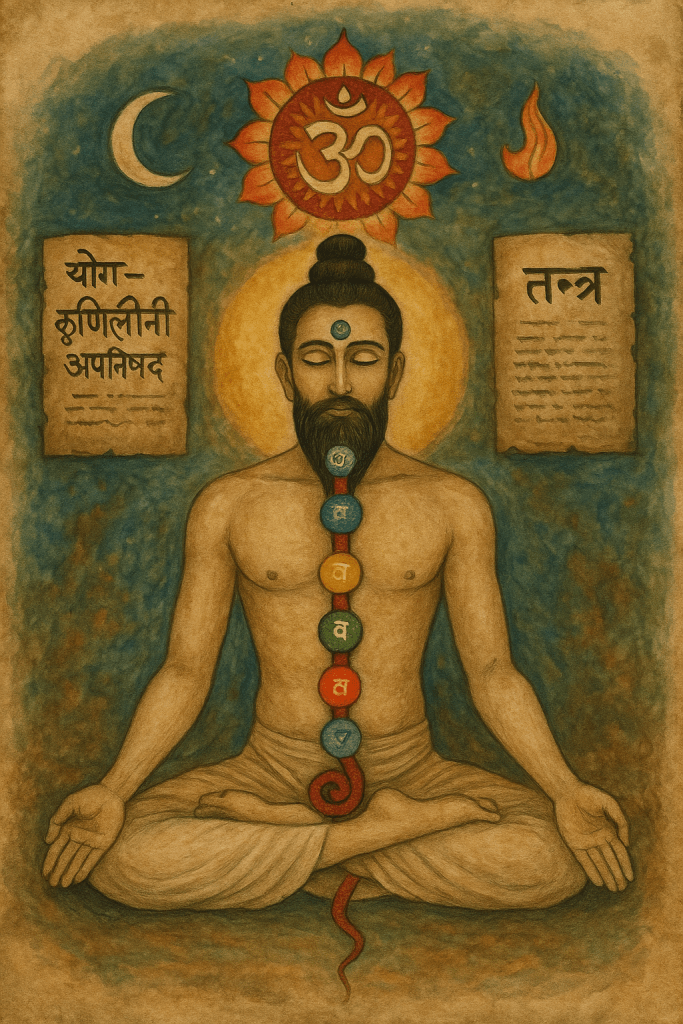
Kundalini Yoga’s roots trace back to ancient India, deeply embedded in the esoteric traditions of Shaiva Tantra.
The term “Kundalini” refers to a coiled, serpent-like energy residing at the base of the spine, symbolizing the latent divine feminine energy, or Shakti, within every individual.
This concept is extensively explored in Tantric texts such as
the Yoga-Kundalini Upanishad, which delves into the awakening and ascent of this energy through the chakras, leading to spiritual liberation.
Over time, Kundalini Yoga evolved as a synthesis of
various yogic paths, including Bhakti Yoga (devotion and chanting),
Raja Yoga (meditation), and Shakti Yoga (energy work).
Practices from Hatha Yoga, such as asanas (postures), pranayama (breath control), and bandhas (energy locks), were incorporated to prepare the body and mind for the safe awakening of Kundalini energy.
In the 15th and 16th centuries, the development of the Gurmukhi script by Guru Angad Dev, the second Sikh Guru, played a pivotal role in preserving and disseminating spiritual teachings.
Gurmukhi, meaning “from the mouth of the Guru,” became the scriptural foundation for Sikhism and was instrumental in recording the hymns and mantras used in devotional practices.
While Kundalini Yoga is not a traditional practice within Sikhism,
the spiritual and ethical principles of Sikh Dharma
have influenced its modern expression.
The emphasis on inner awakening, devotion, and service aligns with the goals of Kundalini Yoga, creating a harmonious blend of practices aimed at personal transformation and spiritual growth.
Yogic Foundations
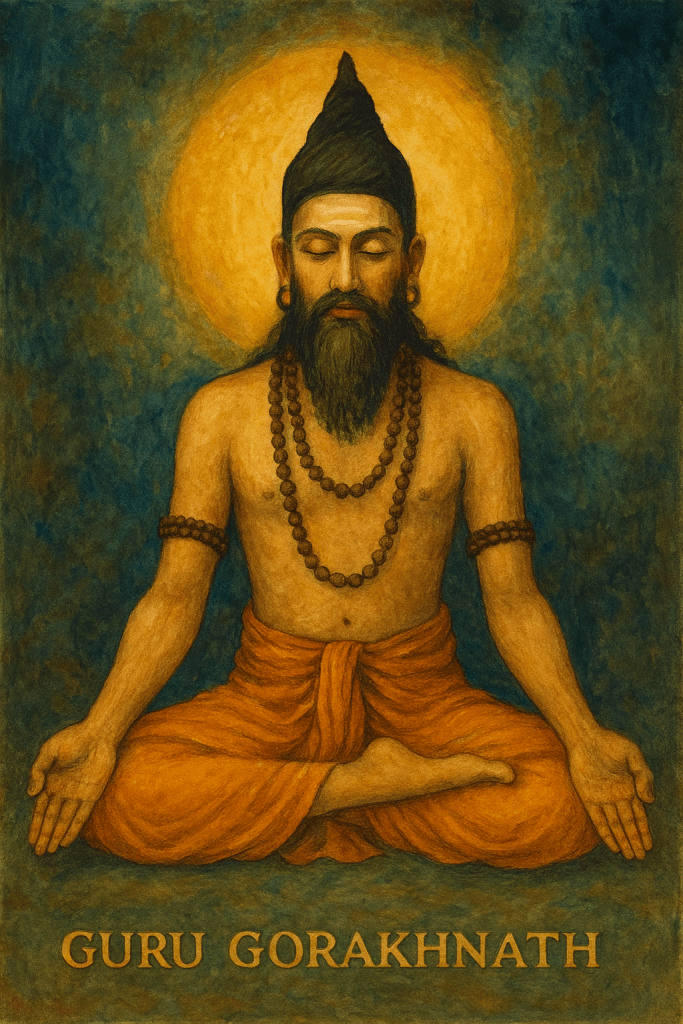
The Goraksha Shataka, attributed to the sage Goraksha (Gorakhnath),
is a seminal text from the 11th–12th century
that laid the groundwork for Hatha Yoga practices.
This text is among the earliest to detail techniques for awakening Kundalini energy, introducing methods such as
“the stimulation of Sarasvati,” which involves specific breath control practices (pranayama) and energy locks (bandhas) .
Gorakhnath, a prominent figure in the Natha Sampradaya,
emphasized the importance of direct experience and inner transformation over ritualistic practices.
The Natha tradition integrated elements from Shaivism, Tantra, and Buddhist teachings, focusing on the awakening of the inner
spiritual energy (Kundalini) through disciplined practice.
The Goraksha Shataka outlines a six-limbed path of yoga,
differing from Patanjali’s eightfold path by omitting the initial ethical precepts (yamas and niyamas) and concentrating on physical and meditative disciplines: asana (posture), pranayama (breath control), pratyahara (withdrawal of senses), dharana (concentration), dhyana (meditation), and samadhi (absorption) .
Central to this text is the concept of awakening the dormant Kundalini energy residing at the base of the spine. Through practices like mula bandha (root lock), uddiyana bandha (abdominal lock),
and jalandhara bandha (throat lock), practitioners aim to guide this energy upward through the central channel (sushumna), piercing the three granthis (knots) associated with Brahma, Vishnu, and Rudra, ultimately leading to spiritual liberation.
The teachings of the Goraksha Shataka have profoundly influenced modern Kundalini Yoga, particularly in emphasizing the physiological and energetic aspects of spiritual practice.
By focusing on the subtle body and its energies, this tradition offers a comprehensive approach to self-realization that transcends mere physical exercise, aiming instead for the complete transformation of consciousness.
The Sikh Gurus
and Their Contributions
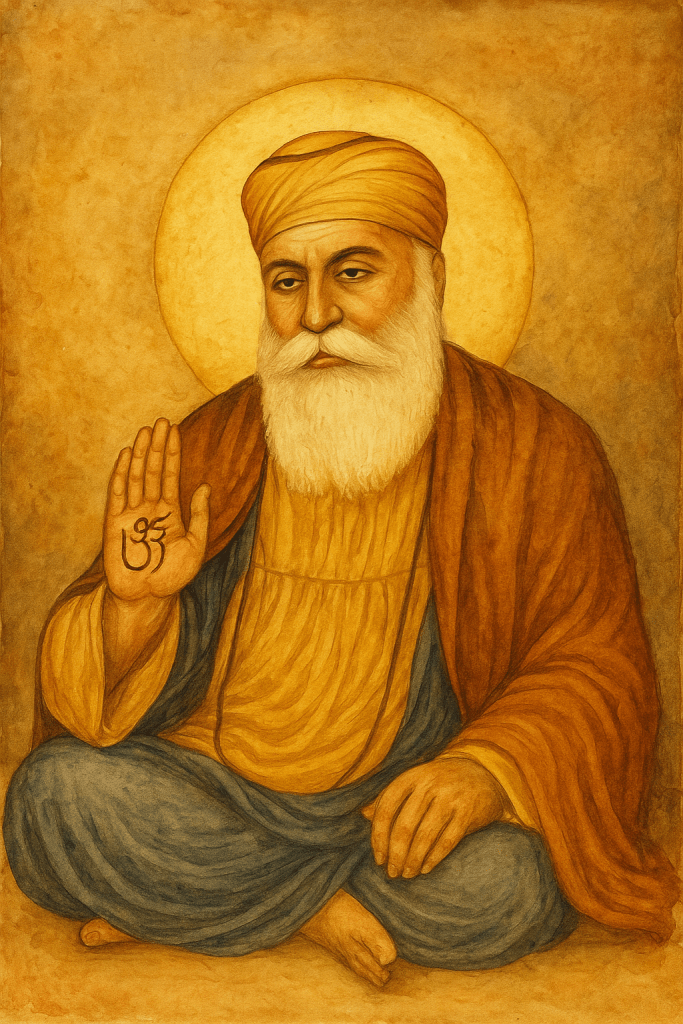
The Sikh tradition, founded by Guru Nanak Dev Ji in the 15th century, emphasizes inner awakening, universal love, and ethical living. Guru Nanak’s teachings centered on the oneness of the Divine (Ik Onkar), the equality of all beings, and the necessity of direct personal experience of God through meditative remembrance.
His introduction of Naam Simran—the repetitive chanting of the Divine Name—lays a clear precedent for mantra practices central to Kundalini Yoga today.
Guru Angad Dev Ji, the second Guru, played a pivotal role
by developing and formalizing the Gurmukhi script, which preserved the sacred hymns (Gurbani) of the Gurus and saints across India.
Gurmukhi remains a key scriptural and vibrational foundation in Kundalini Yoga, from sacred chants like Sat Nam (“Truth is my identity”) and Wahe Guru (“Wondrous is the remover of darkness”), to the rich philosophical depth of Japji Sahib—Guru Nanak’s foundational morning prayer.
Successive Gurus—Guru Amar Das Ji, Guru Ram Das Ji, and Guru Arjan Dev Ji—continued to deepen the tradition through service, devotional poetry, and the institutional
establishment of spiritual community (sangat).
Guru Ram Das Ji is credited with several hymns chanted today in Kundalini Yoga, and Guru Arjan Dev Ji’s compilation of the Adi Granth (the precursor to the Guru Granth Sahib) brought together a spiritually inclusive scripture that honored voices across yogic and bhakti traditions.
While the Sikh Gurus did not explicitly teach Kundalini Yoga as a formalized practice, their spiritual teachings, mantric transmissions, and devotional poetry have become core pillars within the modern form.
Through the vibration of Gurmukhi mantras, the ethical clarity of Sikh dharma, and the yogic application of breath and sound, a unique synthesis emerged—what we now recognize as Kundalini Yoga.
It is this fusion of ancient yogic science with Sikh devotional consciousness that creates the rich inner
architecture of the practice today.
Bringing Kundalini Yoga
to the West:
Yogi Bhajan and Guru Singh

Yogi Bhajan:
The Introduction of Kundalini Yoga
to the West
Born Harbhajan Singh Puri in 1929 in Kot Harkarn, Punjab, British India, Yogi Bhajan was introduced to spiritual practices early in life. He studied under various spiritual teachers and was declared a master of Kundalini Yoga at the age of 16 by his teacher, Sant Hazara Singh. In 1968, Yogi Bhajan immigrated to North America, initially to Canada, and soon began teaching Kundalini Yoga in the United States. He established the Healthy, Happy, Holy Organization (3HO) in 1969 to promote his teachings.
Yogi Bhajan’s approach to Kundalini Yoga was a synthesis of various spiritual traditions, incorporating elements from Sikhism, Hatha Yoga, and Tantric practices. He emphasized the use of kriyas (specific sets of exercises), pranayama (breath control), mantra chanting, and meditation to awaken the Kundalini energy believed to reside at the base of the spine. His teachings attracted a wide following, leading to the establishment of numerous Kundalini Yoga centers worldwide.
Guru Singh:
A Contemporary Voice
in Kundalini Yoga Science
Guru Singh is a third-generation yogi, spiritual teacher, author, and musician who has played a significant role in the dissemination of Kundalini Yoga in the West. Born in 1945 in Seattle, Washington, he was introduced to yogic practices early in life. Guru Singh studied under Yogi Bhajan for 35 years, becoming one of his close students and collaborators.
Through his teachings, Guru Singh has emphasized the integration of Kundalini Yoga into daily life, focusing on conscious living, meditation, and the use of sacred sound. He has taught extensively, offering classes, workshops, and lectures that combine ancient yogic wisdom with contemporary insights from a scientific point of view. His work continues to inspire and guide students in their spiritual journeys, opening the path of evolution in practice.
The Rise of 3HO & KRI:
Spreading Kundalini Yoga Globally

Founding Vision and Early Expansion
In 1969, Yogi Bhajan established the 3HO Foundation—Healthy, Happy, Holy Organization—in Los Angeles, aiming to share the transformative practice of Kundalini Yoga with Western audiences. Recognizing the spiritual yearning of the era, he introduced a holistic lifestyle encompassing yoga, meditation, and ethical living. This approach resonated deeply, leading to rapid growth and the establishment of numerous teaching centers worldwide.
To ensure the integrity and consistency of Kundalini Yoga teachings, Yogi Bhajan founded the Kundalini Research Institute (KRI) in 1972. KRI became the official body responsible for preserving the teachings, training instructors, and developing educational materials.
Global Impact and Community Building
Over the decades, 3HO and KRI
have significantly expanded the reach of Kundalini Yoga:
Scientific Research: KRI supports and disseminates research on the benefits of Kundalini Yoga, contributing to its credibility and integration into wellness programs.
Educational Outreach: KRI certifies Kundalini Yoga teachers globally, with over 800 trainers and more than 200 programs annually, ensuring high-quality instruction.
Community Events: 3HO organizes international events like the Summer and Winter Solstice gatherings, fostering a sense of unity and shared purpose among practitioners.
Recognition and Honors
The organizations have acknowledged individuals who have made significant contributions to the spread and development of Kundalini Yoga through the KRI Outstanding Achievement Award. This honor celebrates those who have dedicated themselves to uplifting humanity through these teachings.
Unveiling the Shadows:
Controversies Surrounding
3HO and KRI
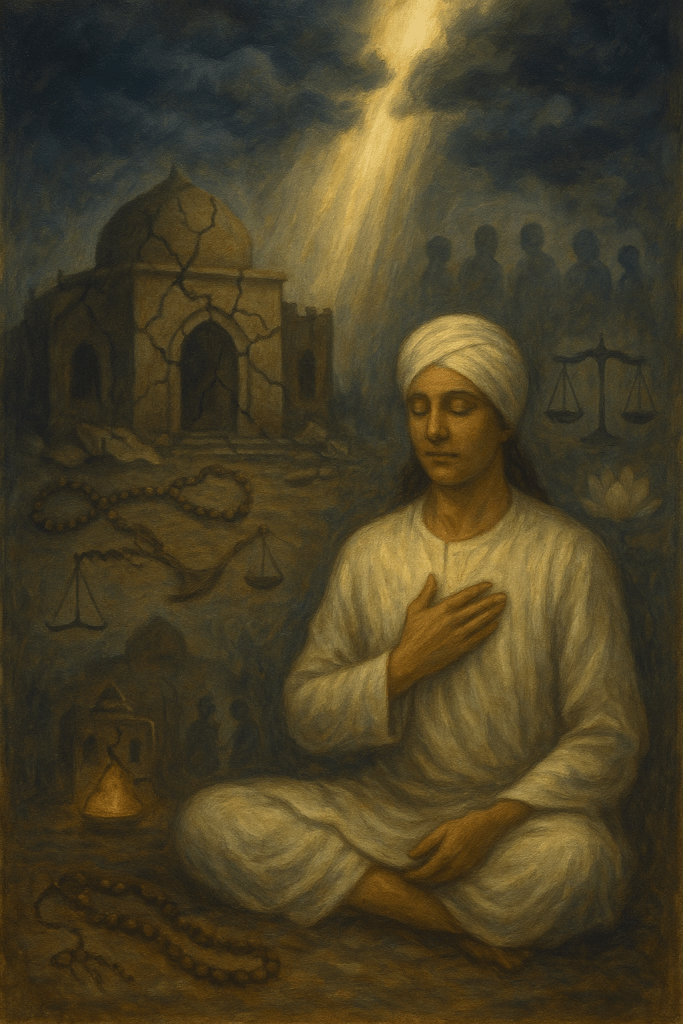
Allegations Against Yogi Bhajan
In early 2020, a significant upheaval occurred within the Kundalini Yoga community following the publication of Premka: White Bird in a Golden Cage by Pamela Saharah Dyson, Yogi Bhajan’s former secretary. The memoir detailed accounts of sexual abuse and misconduct by Yogi Bhajan, leading to a surge of similar allegations from other former students and associates.
In response, the Siri Singh Sahib Corporation (SSSC), overseeing 3HO and KRI, commissioned an independent investigation by An Olive Branch (AOB), an organization specializing in addressing misconduct within spiritual communities. The AOB report, released in August 2020, concluded that it was “more likely than not” that Yogi Bhajan engaged in sexual battery, abuse, harassment, and other unethical behaviors. The report documented 75 incidents of abuse reported by 36 individuals, including claims of rape, unwanted touching, and exposure to pornography.
Organizational Responses
and Community Impact
Following the report’s release, 3HO, KRI, and affiliated organizations publicly acknowledged the findings and expressed a commitment to transparency and healing. They established the Collaborative Response Team (CRT) to address the allegations and support affected individuals. The organizations also initiated community forums and listening sessions to facilitate dialogue and reconciliation.
Despite these efforts, the revelations led to a crisis of faith among many practitioners. Some members left the community, while others grappled with separating the teachings of Kundalini Yoga from the actions of its prominent figure. The situation sparked broader discussions about power dynamics, accountability, and ethical leadership within spiritual movements.
A New Wave of Integrity:
Evolving the Path
of Kundalini Yoga
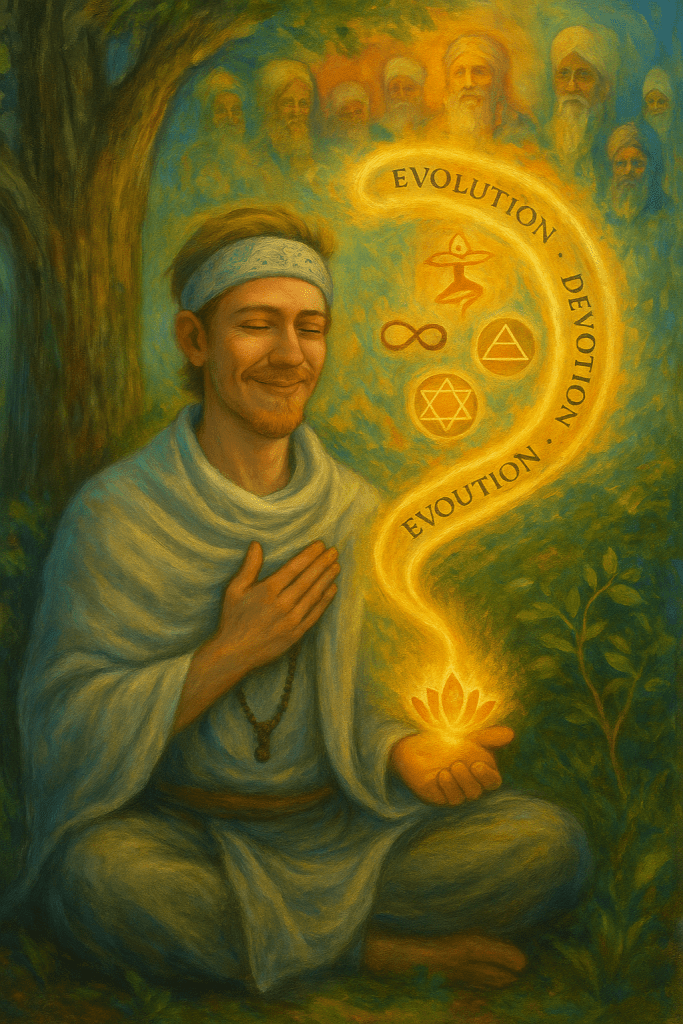
In the wake of great light often come great shadows—and as the truth of past harms within the Kundalini Yoga lineage has been revealed, it has become clear: a new generation is being called not only to preserve the heart of this sacred technology, but to heal and evolve it.
I am part of this new wave. And so are you.
We are not here to idolize personalities.
We are here to embody principles.
As students and teachers in this time, we are bridging ancient wisdom with new paradigms of healing. We are reclaiming the science of Kundalini Yoga not as a fixed dogma, but as a dynamic, ever-evolving system that responds to the needs of the body, mind, and spirit today.
This new chapter in Kundalini Yoga honors:
- Deeper Somatic Integration – understanding trauma in the body and how kriya, breath, sound, and movement help release it
- Ecstatic Movement & Sacred Dance – awakening the flow of Shakti through rhythm, play, and embodiment
- Sacred Sexuality & True Tantra – restoring reverence to the energetic union of masculine and feminine within and without
- Quantum Science & Consciousness Studies – merging modern understandings of vibration, coherence, and neuroplasticity with ancient yogic truths
But none of this is meaningful without ethics.
As a teacher, guide, and practitioner, I am committed to embodying integrity in every aspect of this work.
This includes:
- Honoring consent and autonomy at every level
- Creating inclusive, trauma-informed spaces
- Speaking honestly about the history of this lineage
- Holding no position of spiritual superiority or unquestionable authority
I am also a proud signatory of the Association for Spiritual Integrity, an organization that upholds transparent, ethical, and compassionate principles for spiritual teachers and communities. My path is not one of perfection, but one of ongoing accountability, humility, and service.
Kundalini Yoga is not broken.
But it is ready to evolve.
And I am here to tend that evolution—with clarity, with care, and with devotion.
Closing the Circle,
Opening the Path
The history of Kundalini Yoga is not a straight line—it’s a spiral. It weaves together ancient wisdom, cultural revolution, sacred sound, and human error. To honor this path is not to blindly follow it, but to walk it consciously—with eyes open, heart clear, and breath steady.
As we remember the roots, we also step into the responsibility of carrying the teachings forward with greater awareness, inclusion, and integrity. Whether you are new to this practice or returning with a deeper lens, know that you are part of this living lineage—one that evolves every time a soul chooses to rise.
In an upcoming blog post, we enter the practice itself by exploring what elements make a Kundalni Yoga Krya!
 Yogi Chand Tagdeep
Leave a comment